38 Billion Liters of Water Overflow Daily : Discover the Innovation That Can End It
Overflowing Overhead Tanks Waste 38 Billion Liters Daily—Here’s How Automation Can Help
10/12/20253 min read
Tackling Water Wastage in India: The Overflowing Overhead Tank Problem and an Innovative Automated Solution
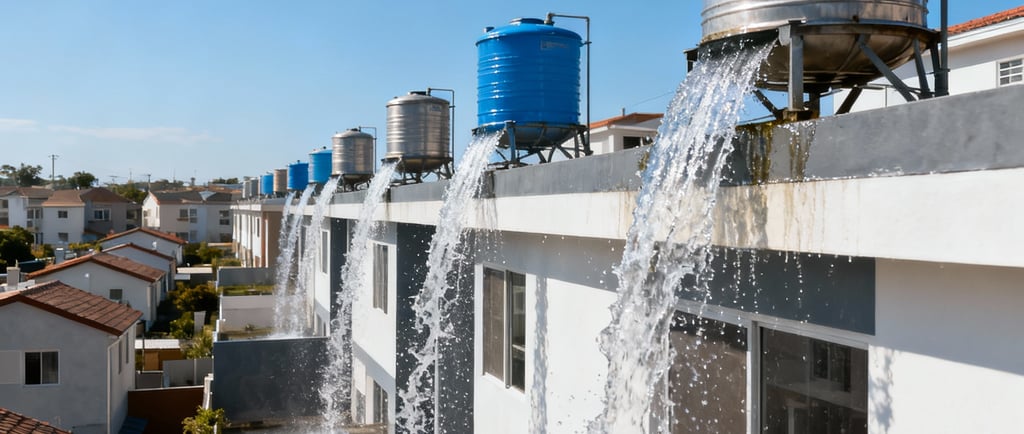
Water is an invaluable resource, yet India faces critical challenges in water conservation, especially in its urban and semi-urban areas. One of the often overlooked but significant contributors to water wastage is the overflowing of overhead water tanks. This problem not only wastes precious treated water but also leads to economic, environmental, and infrastructure-related consequences. Fortunately, innovative technology like the Automated Water Motor Cut-Off device offers a practical and effective solution to mitigate this issue on a large scale.
Understanding the Overflowing Overhead Tank Problem
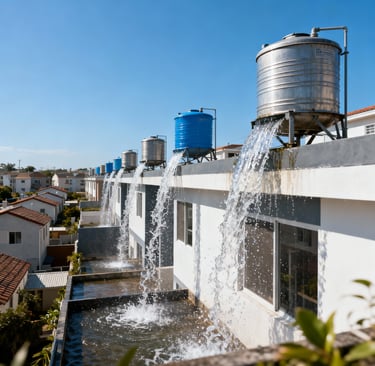
In many Indian households, housing societies, and public buildings, overhead water tanks are used to store water supplied by municipal systems or private sources. However, due to manual monitoring of tank water levels or malfunctioning float valves, it is common for these tanks to overflow. This overflow results in a continuous and unnoticed loss of water.
Scale of Wastage
Studies and reports indicate that water wastage due to overflowing overhead tanks is alarmingly high in India:
Over 38 billion liters of water are wasted daily from tank overflows across the country.
A single incident of overflow lasting 30 minutes can waste hundreds to thousands of liters of water.
On average, overflow accounts for over 30% of domestic water wastage in many urban housing societies, translating to billions of liters lost annually.
This wastage strains municipal water supplies, impacts household expenses, and contributes to the broader water scarcity crisis.
Consequences
The ramifications go beyond just lost water:
Financial strain: Residents and housing society management end up paying higher water bills or buying extra water through tankers.
Infrastructure damage: Continuous overflow leads to damp walls, algae formation, and structural weakening, increasing repair costs.
Environmental impact: Wasting treated water puts stress on freshwater sources and exacerbates water scarcity.
Energy wastage: In places like Delhi, it was found that water overflow corresponds with significant energy loss due to pump operation beyond necessity.
The Need for a Smart Solution
Traditional methods of preventing overflow, such as manual monitoring or float valves, have proven inadequate due to human error or technical failures. What is needed is an automated, reliable, and user-friendly mechanism to ensure water pumps stop automatically once tanks are full.
Innovative Automated Cut-Off Device: A Game Changer
An inspiring solution to this problem comes from an innovative project by a young student, Rishu Mishra, whose Automatic Water Motor Cut-Off Device eliminates water wastage by stopping the water pump automatically when the overhead tank reaches full capacity.
How It Works
The device employs sensors to monitor the water level in the tank.
When the tank is full, it automatically cuts the power supply to the water pump.
This prevents overflow and conserves both water and electricity without user intervention.
Benefits of the Device
Massive water savings: Prevents thousands of liters wasted per household annually.
Energy efficiency: Pumps run only as needed, saving electricity.
Preserves infrastructure: Eliminates damage caused by prolonged overflow.
Low maintenance & easy installation: Designed for widespread adoption with minimal technical needs.
Supports water conservation awareness: The project promotes behavioral change to value water as a precious resource.
The Broader Impact on Water Conservation in India
Widespread adoption of such automated devices can revolutionize water management in Indian cities and towns, helping:
Reduce the substantial water losses that affect municipal supplies.
Lessen the financial burden on residents caused by wasted water.
Support sustainable urban water systems aligned with national water conservation goals.
Foster a culture of accountability and innovation to combat water scarcity.
Conclusion
Water wastage from overflowing overhead tanks is a hidden yet pressing issue fueling India’s water crisis. Tackling this challenge requires smart, proactive solutions like the Automated Water Motor Cut-Off Device developed by H9V and championed by young innovators. This device exemplifies how technology and passion, combined with public awareness, can make a tangible difference. Embracing such innovations will be crucial for securing India's water future, saving resources, money, and conserving energy—one tank at a time.
Water conservation starts with awareness, but it thrives with action—and automated solutions are the next step in this essential journey.